Product virality is not “growth magic”
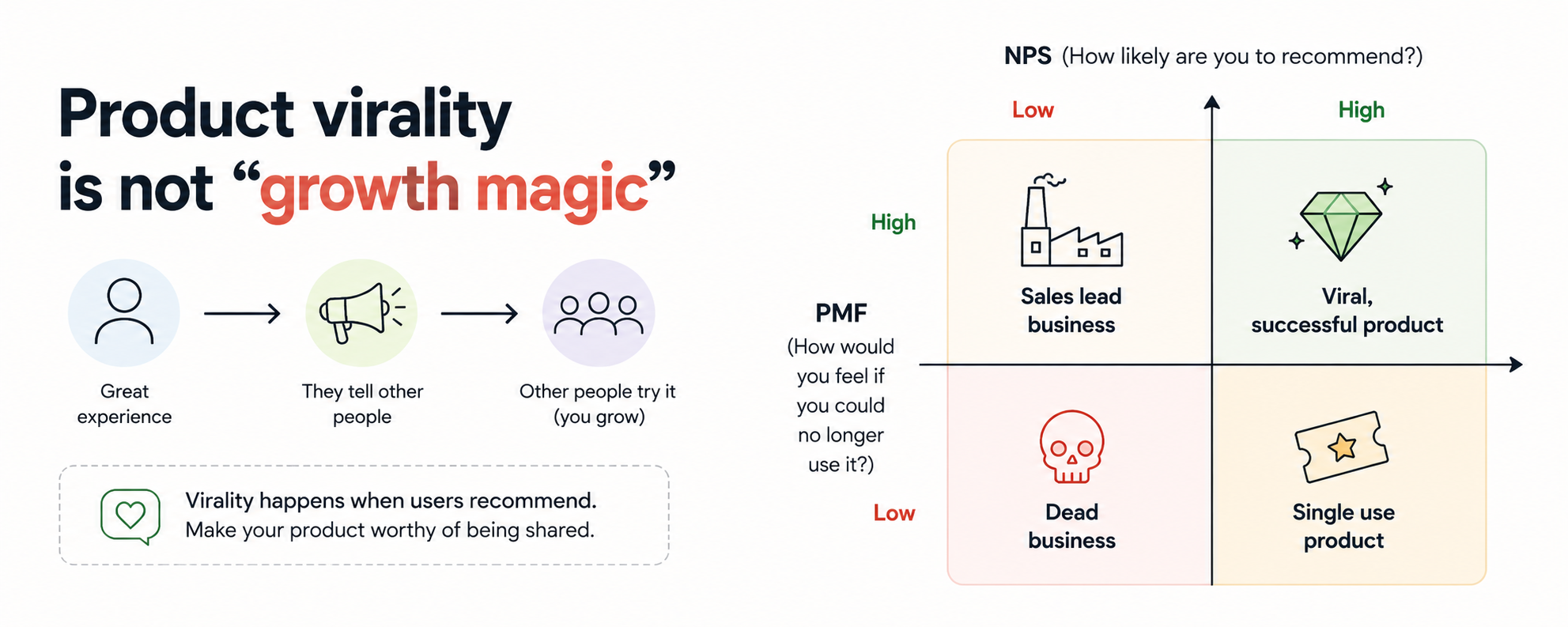
How do things go viral? Things go viral because people tell other people about them. That’s it.
Some people share because it makes them look smart, others because they want to appear not virtuous than they are. Some share in person, others retweet or add a review on Google Maps.
It doesn’t matter. As long as your users tell other people, you are going viral.
This means we can optimize for going viral. Make the product or feature interesting enough to share.
This is what we tried to measure with NPS scores. Promotor is the key word. How many users are recommending this? Unfortunately most users are sophisticated enough to know about NPS scores now, so these results work less well than they used to.
There’s another measure that’s equally important: Product Market Fit. When Sean Ellis wanted to measure this he wanted to find a proxy for how likely the user is to keep using the product.
He found one by asking “How would you feel if you could no longer use [product]?“. If they are disappointed, you have a good product.
When you measure PMF this way what you’re measuring is retention. How likely is the user to keep using the product. Because if your product is viral, but everyone leaves, the number of users doesn’t go up.
If you get high NPS and PMF scores, you have a viral successful product.
If you have high NPS and low PMF, you have a single use product. Like a comedy show or book. Could be a great business, but it’s not a scalable one.
If you have a low NPS and high PMF, you have a sales lead business. All B2B companies used to do this, and believe it was the only way. Since no one is talking about you, your sales need to reach out to everyone. This is what @paulg talked about when he said “do things that don’t scale”. All businesses start here.
If both measures are low, you have a dead business.
Now you know why design, or taste, matters. You need to get people talking about your product. And that only happens when it works really well.